
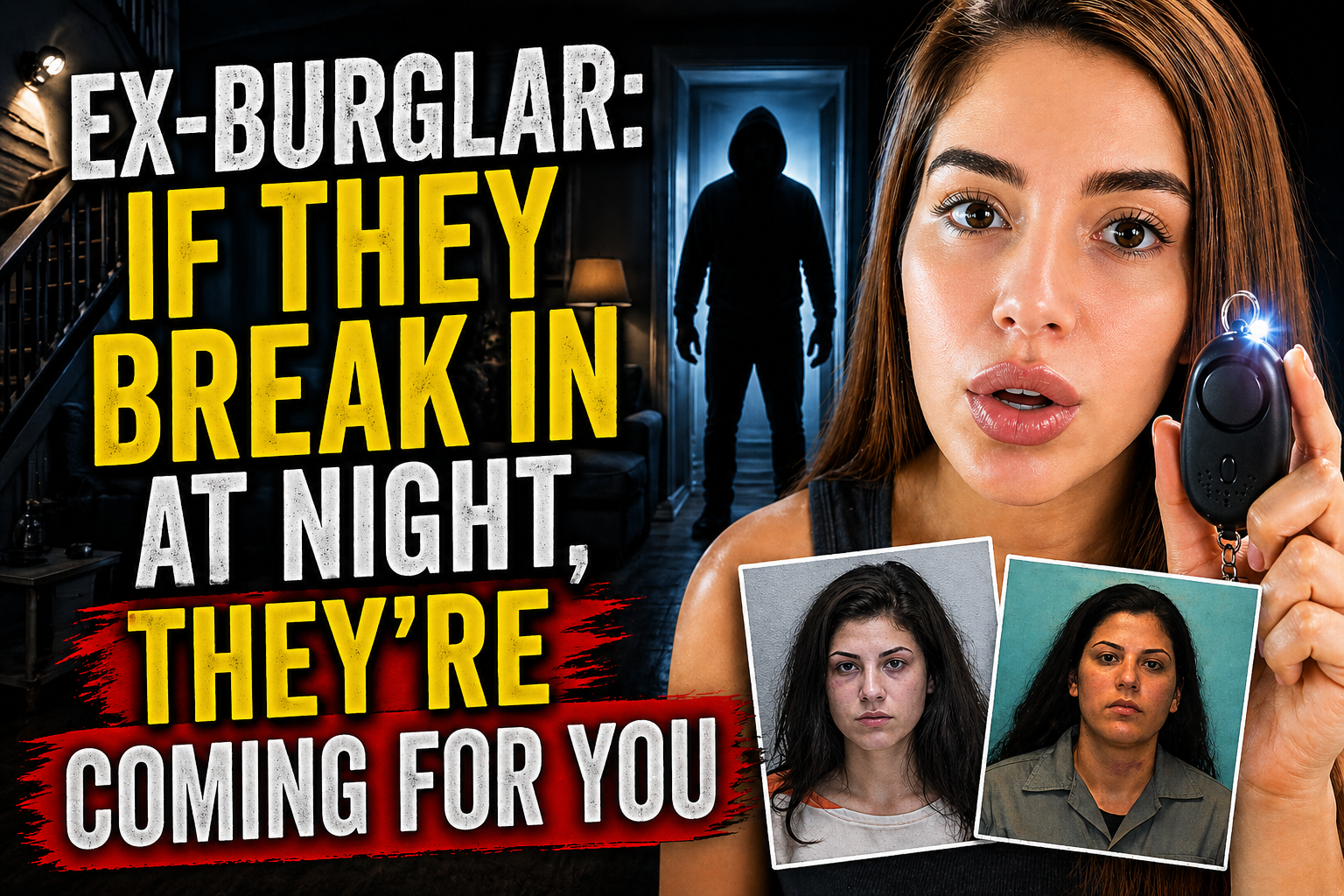
It’s a chilling statement, but one former burglar didn’t hesitate to say it:
“If they break into your house during the day, they’re coming for your stuff. If they break into your house at night… they’re coming for you.”
According to her, nighttime break-ins are different. Even if the intruder isn’t specifically targeting you, they know you’re home… and they don’t care.
That’s why she shared a step-by-step breakdown of what you should do before and during a break-in, based on years of experience breaking into homes herself.
Step One: Prepare Before Anything Happens
She stresses that what you do before a break-in matters just as much as what you do during one.
Motion-Activated Lights Are Critical
She recommends placing motion sensor lights throughout your home:
- Staircases
- Living rooms
- Entryways
- Anywhere movement would trigger them
The goal is simple: light = exposure, and intruders hate that.
Get a Personal Alarm
She specifically mentions a small device called the Birdie personal safety alarm.
- You can pull a pin or press it
- It creates an extremely loud noise
- It continues until manually reset
She suggests placing multiple alarms around your home so they’re always within reach.
Use Security Cameras With Sirens
She references systems like Ring camera system and Wyze security cameras.
The key point isn’t just recording… it’s the siren feature.
You need to:
- Know how to activate the siren quickly from your phone
- Be ready to trigger it instantly
Set Up Emergency Features On Your Phone
She emphasizes setting up emergency access ahead of time, especially on devices like the Apple iPhone.
This includes:
- Quick access to emergency services
- Location sharing
- The ability to contact help without speaking
So if something happens, you don’t waste time navigating your phone.
Keep Your Car Key Nearby
Most people leave their spare key somewhere random.
She recommends keeping it in your bedroom because:
- The key fob has a built-in alarm
- You can trigger it instantly if needed
What To Do If You Hear Someone In Your House At Night
This is where her advice becomes very direct.
1. Contact Emergency Services Immediately
Don’t investigate.
Don’t wait.
Trigger emergency services right away. Even sliding into emergency mode on your phone is enough to send your location and alert authorities.
2. Turn On Lights And Alarms
Everything at once.
- Motion lights will already start activating
- Trigger your camera system siren
- Set off your car alarm
Her reasoning:
“They don’t like lights and they don’t like noise.”
The goal is to overwhelm and disorient the intruder immediately.
3. Use Your Personal Alarm Strategically
This part is very specific.
- Activate the alarm
- Throw it into a different room
- Move in the opposite direction
This creates confusion and draws attention away from you.
4. Get To A Safer Position
If you’re in a two-story home:
- Stay upstairs
- “Hold the higher ground”
If you’re on ground level:
- Find a window
- Get out immediately
5. Move Fast, But Stay Focused
She acknowledges that panic is natural, especially if children are involved.
But the sequence matters:
- Contact emergency services
- Trigger lights and alarms
- Then move
She notes this should take only seconds, but it creates a critical window to escape or stay hidden.
The Core Principle Behind All Of This
Everything comes back to one idea:
Burglars hate attention.
Light exposes them.
Noise attracts others.
The more you create both, the harder it becomes for them to operate.
Final Thought
The advice is blunt, but it’s based on experience.
Nighttime break-ins aren’t just about stolen items. They carry a different level of risk.
And according to someone who’s been on the other side, your best move isn’t confrontation…
It’s speed, noise, light, and creating as much disruption as possible.